
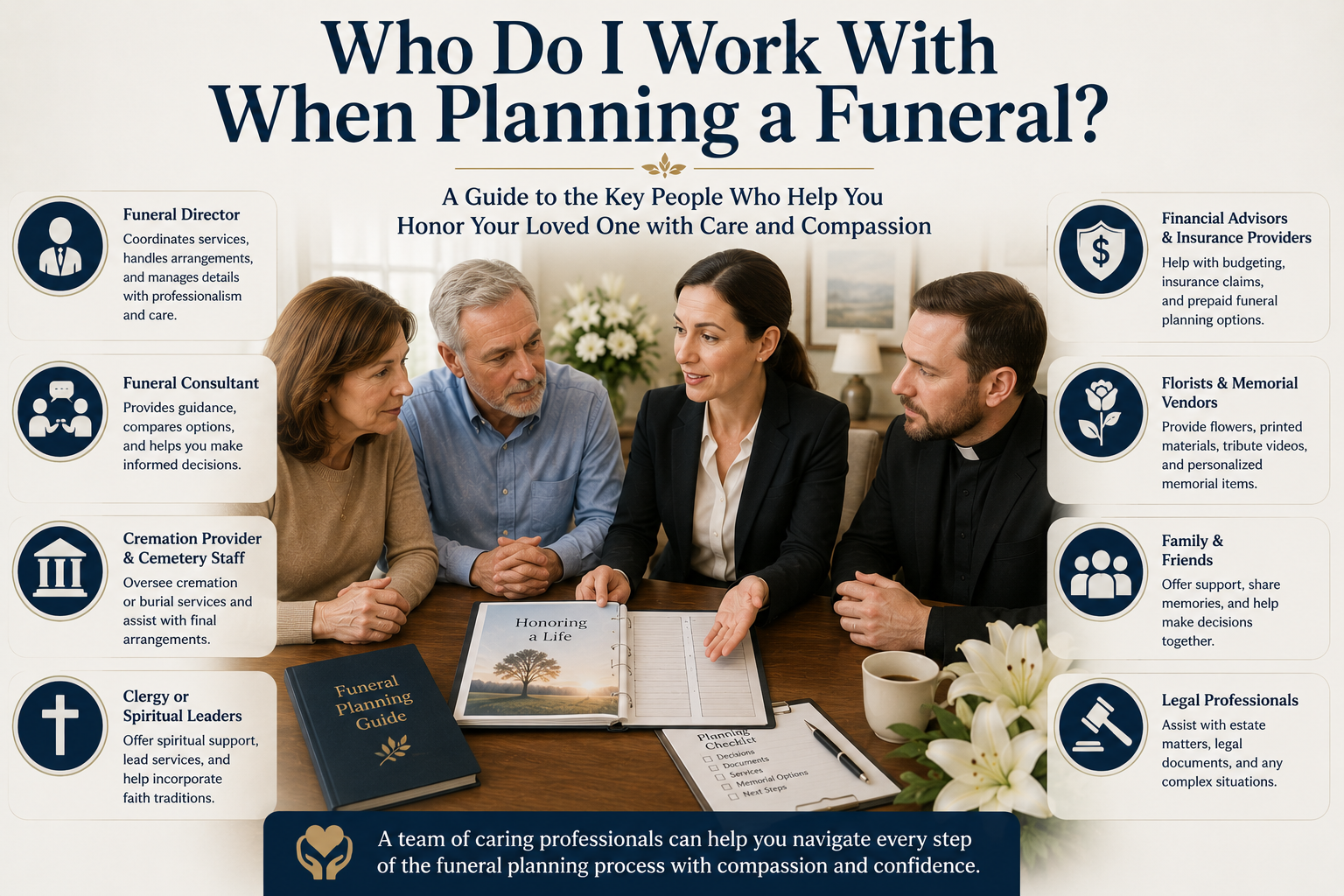
Who Do I Work With When Planning a Funeral?
Planning a funeral is an emotional and often overwhelming process. In addition to coping with grief, families are suddenly faced with important decisions, financial considerations, legal paperwork, and service arrangements. Many people don’t realize how many professionals and service providers can be involved in funeral planning until they are in the middle of it.
Understanding who you may work with during the process can help reduce confusion and make funeral planning more manageable. From funeral directors and cremation providers to clergy members and funeral consultants, each person plays an important role in helping families honor their loved ones respectfully and thoughtfully.
In this guide, we’ll explain the key people involved in funeral planning and how they can support you during one of life’s most difficult moments.
Why Funeral Planning Requires a Team
Funeral planning involves more than organizing a memorial service. It often includes:
- Legal documentation
- Transportation arrangements
- Burial or cremation coordination
- Financial planning
- Ceremony preparation
- Emotional and spiritual support
Because there are many moving parts, families frequently work with several professionals throughout the process.
Knowing who does what can make it easier to ask questions, compare options, and make informed decisions.
1. Funeral Director
A funeral director is often the primary professional families work with during funeral planning.
What They Do
Funeral directors coordinate funeral or memorial services and help manage logistical details.
Their responsibilities may include:
- Transporting and preparing the deceased
- Filing legal paperwork and permits
- Coordinating burial or cremation services
- Scheduling ceremonies
- Helping families choose service options
They also guide families through difficult decisions and provide compassionate support during emotional times.
Why They’re Important
Funeral directors help simplify the planning process and reduce stress by handling many complex tasks on behalf of the family.
2. Funeral Consultant
A funeral consultant is an independent advisor who helps families navigate funeral planning and compare options.
What They Do
Unlike funeral directors who work for funeral homes, funeral consultants often provide unbiased guidance.
They may help with:
- Budget planning
- Comparing funeral providers
- Understanding pricing and packages
- Preplanning funeral arrangements
- Explaining cremation and burial options
Why Families Hire Them
Funeral consultants are helpful for families who want additional guidance or want to make informed decisions without pressure from a specific provider.
3. Cremation Provider or Cemetery Staff
Depending on whether you choose cremation or burial, you may work with specialized providers.
Cremation Providers
Cremation providers handle:
- Cremation procedures
- Required documentation
- Urns and memorial options
Many funeral homes coordinate directly with crematories.
Cemetery Staff
If burial is chosen, cemetery staff help with:
- Burial plot selection
- Graveside arrangements
- Opening and closing of graves
- Memorial markers or headstones
These professionals ensure burial services are carried out properly and respectfully.
4. Clergy or Spiritual Leaders
For religious or spiritual funerals, clergy members or spiritual leaders often play an important role.
What They Do
They may:
- Lead funeral or memorial services
- Offer prayers or readings
- Provide emotional and spiritual support
- Help families incorporate religious traditions
Why They Matter
Spiritual guidance can provide comfort and meaning during times of loss, especially for families with strong faith traditions.
5. Financial Advisors or Insurance Providers
Funeral planning also involves financial considerations. Some families work with financial professionals or insurance providers to manage costs.
They May Help With:
- Funeral insurance claims
- Prepaid funeral plans
- Final expense insurance
- Budgeting for funeral costs
Having financial guidance can help families avoid unnecessary stress and make practical decisions.
6. Florists and Memorial Vendors
Funeral services often include flowers, printed materials, memorial displays, and personalized tributes.
Common Vendors Include:
- Florists
- Printers for memorial cards and programs
- Video tribute creators
- Monument and headstone companies
These professionals help personalize services and create meaningful memorial experiences.
7. Family Members and Close Friends
While professionals handle many logistics, family and friends also play a major role in funeral planning.
Loved Ones Often Help With:
- Making decisions together
- Sharing memories and stories
- Organizing memorial gatherings
- Supporting grieving family members
Funeral planning is often a collaborative process that brings people together during difficult times.
8. Legal Professionals (When Necessary)
In some situations, legal guidance may also be needed.
You May Need an Attorney If:
- There are estate or inheritance issues
- The death was unexpected or complicated
- There are disputes regarding arrangements
- Legal documents are missing
Although not always necessary, legal professionals can help families navigate complex situations.
How to Decide Who You Need
Not every funeral requires working with all of these professionals. The people involved will depend on:
- Your budget
- Burial or cremation choice
- Religious or cultural traditions
- Size and complexity of the service
- Whether arrangements were preplanned
Simple cremation services may involve only a few providers, while traditional funerals may require coordination between many individuals.
The Benefits of Professional Support
Working with experienced professionals can make funeral planning far less overwhelming.
Benefits include:
- Reduced stress and confusion
- Professional guidance and expertise
- Better organization and coordination
- Emotional reassurance during grief
- Help managing paperwork and deadlines
Many families feel more comfortable knowing experienced professionals are helping them navigate the process.
Questions to Ask When Choosing Funeral Professionals
Before hiring or working with anyone, it’s important to ask questions and understand your options.
Helpful Questions Include:
- What services are included?
- What are the costs and fees?
- Are there package options?
- Can services be customized?
- What paperwork will they handle?
- Are payment plans available?
Clear communication helps families avoid misunderstandings and make informed choices.
Why Preplanning Makes the Process Easier
One of the best ways to simplify funeral planning is through preplanning.
Preplanning allows individuals to:
- Document their wishes
- Explore prepaid funeral or cremation plans
- Compare providers ahead of time
- Reduce stress for loved ones later
When arrangements are planned in advance, families often need less urgent coordination after a loss.
Funeral Planning Is About More Than Logistics
Although funeral planning involves practical decisions, it is ultimately about honoring a life and supporting loved ones through grief.
The professionals you work with should help create a respectful, compassionate, and meaningful experience that reflects your family’s values and wishes.
Choosing the right support team can make a difficult process feel far more manageable and comforting.
Final Thoughts
So, who do you work with when planning a funeral?
The answer depends on your specific needs, but common professionals include funeral directors, funeral consultants, cremation providers, clergy members, financial advisors, and memorial vendors. Each person plays a unique role in helping families navigate funeral arrangements with care and professionalism.
Understanding these roles can help you make informed decisions, reduce stress, and create a meaningful tribute for your loved one.
At Assure Your Loved Ones, we believe thoughtful planning and compassionate guidance can make all the difference during difficult times. Whether you’re planning ahead or facing an immediate loss, knowing who to turn to for support can bring comfort, clarity, and peace of mind.

All Categories
- 5 Best Burial Insurance Companies in January 2026
- 5 Best Cremation Insurance + Prepaid Plans in 2026
- 6 Best Burial & Final Expense Insurance Companies In 2026
- A Complete Guide to Cremation Insurance
- A Complete Guide To Funeral Pre-Planning
- A Guide to Prepaid Funerals: Plans, Costs, and How to Get Started
- Best Pre-Paid Cremation Plan: Choosing the Best Plan for You
- burial insurance
- Can You Prepay for a Cremation Service?
- Considering Prepaid Funeral Plans? Read This First
- Cremation
- Do you need a funeral director? The pros and cons
- Family Caregiver
- Florida Medicaid and Funeral Costs – Burial Expenses
- funeral
- Funeral Costs
- Funeral Costs and Pricing Checklist
- Funeral Insurance
- Funeral Planning Tips to Help You Make Smart Decisions
- Funeral Plans
- How Much Does Funeral Insurance In Florida Cost?
- How Much Does Funeral Insurance In New York Cost?
- How Prepaid Funeral Plans Work in USA?
- How to Pay for Funeral Expenses: Options Every Family Should Know
- Is Burial (or Funeral) Insurance Worth It?
- Paying Expenses After the Death of a Loved One
- Prepaid Funeral Plans
- Prepaid Funeral Plans in Florida: Smart Planning Without the Gotchas
- Protect Your Loved Ones
- Senior Membership Plans
- Should You Hire a Funeral Director?
- Should You Prepay Your Funeral as Part of Your Estate Plan?
- Signing up for pre-planned funeral services: Is it worth it?
- Six-Step Guide to Preplanning a Funeral or Cremation in Florida
- Smart Ways to Cover the Costs of a Funeral
- Understanding the Benefits of Prepaid Cremation Plans in the USA
- Using a Prepaid Funeral Contract to Spend Down Assets for Medicaid
- Using Medicaid to Pay for Your Funeral Home
- What are the Pros and Cons of Prepaid Funeral Plans?
- What Happens to My Funeral Plan if I Move?
- What is a Funeral Consultant? Why Hire One?
- What is a Prepaid Funeral? How Does It Work? What to Know
- What is Funeral Cover? 3 Reasons to have a Funeral Plan
- What to Know About Pre-Planning Cremation in Florida
- What to Know About Prepaid Funeral Plans
- What You Should Know About Prepaid Funeral Plans
- Who Do I Work With When Planning a Funeral?
- Who Pays for a Funeral When No One Can Afford It? Hidden Resources That Can Help Right Now
- Why is it important to have a funeral director?
Recent Posts

Who Do I Work With When Planning a Funeral?

Should You Hire a Funeral Director?