
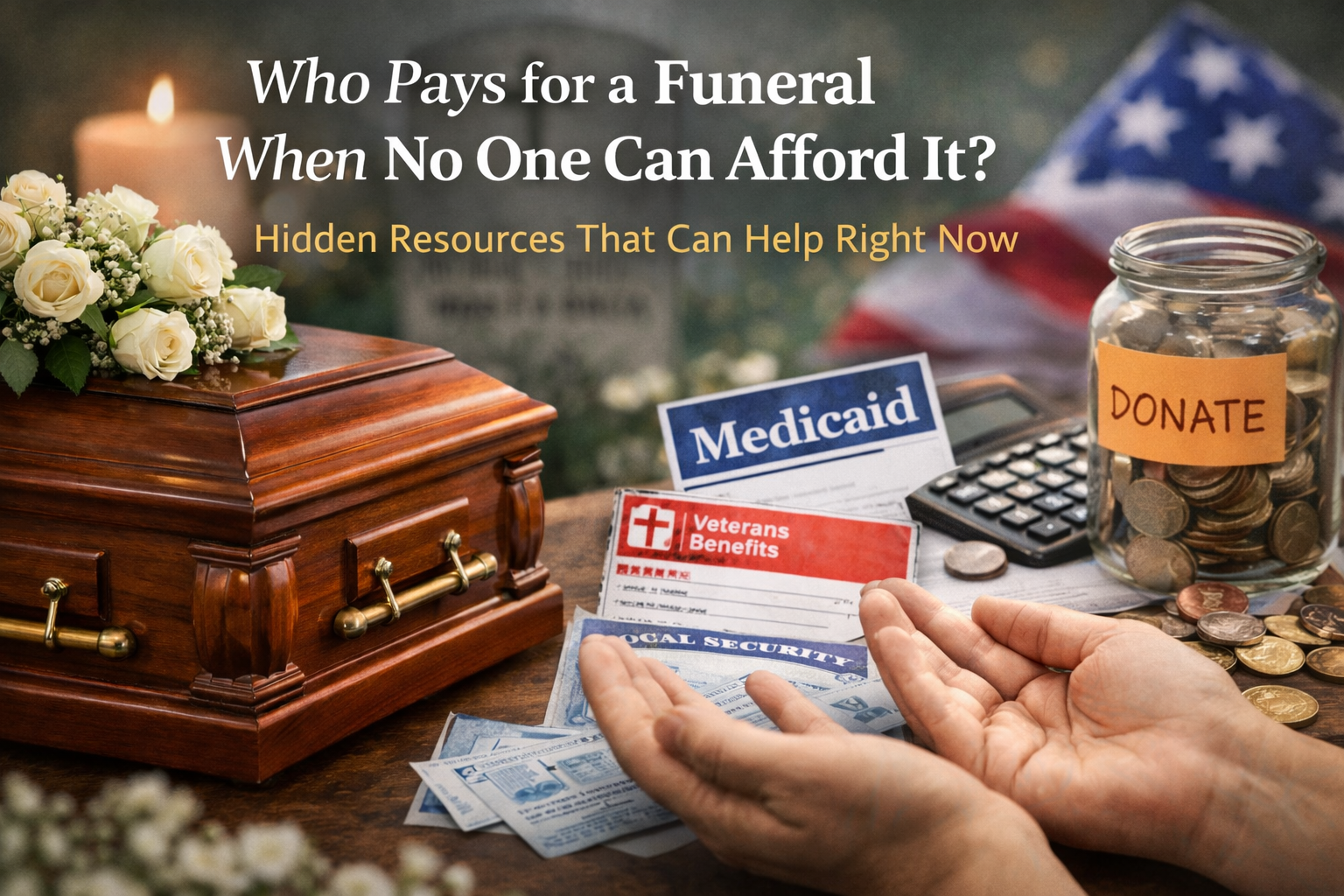
Who Pays for a Funeral When No One Can Afford It? Hidden Resources That Can Help Right Now
When a loved one passes away and there is no money set aside for funeral expenses, families are often left feeling overwhelmed, scared, and unsure of what to do next. Grief is hard enough—financial pressure can make it feel unbearable.
The truth is, you are not alone, and you may have more options than you realize. While funerals can be expensive, there are hidden resources, assistance programs, and practical alternatives that can help cover costs when no one can afford to pay upfront.
This guide explains who is responsible for funeral costs, what happens when there is no money, and where families can turn right now for help.
Are Family Members Legally Required to Pay for a Funeral?
One of the biggest misconceptions is that children, spouses, or relatives are automatically responsible for paying funeral expenses.
In most cases:
- Family members are not legally required to pay funeral costs out of their own pockets
- You are only responsible if you sign a contract agreeing to pay
- You may also be responsible if you were a co-signer on debt or joint account holder
That said, funeral homes usually require someone to arrange and authorize services. Without planning, families may feel pressured to pay simply to move forward.
What Happens If There’s No Money at All?
If the deceased had no savings, no insurance, and no prepaid arrangements, there are still options. Families do not have to choose an expensive service to honor their loved one.
When funds are limited, the focus should be on:
- Meeting legal requirements
- Choosing the most affordable disposition option
- Exploring available assistance programs
Many families are surprised to learn that meaningful, respectful services are still possible—even on a very limited budget.
Option 1: County or State Indigent Burial Programs
Many counties offer indigent burial or cremation programs for individuals who die with little or no assets. These programs are designed specifically for situations where no one can afford funeral expenses.
Typically, these programs:
- Provide basic cremation or burial
- Cover transportation and permits
- Do not include a formal service or viewing
Eligibility is usually based on:
- Income and asset limits
- Lack of family resources
- Proof that no funds are available
Local social services offices or the county medical examiner can provide information quickly in urgent situations.
Option 2: Social Security Death Benefit
The Social Security Administration offers a one-time death benefit of up to $255 to an eligible surviving spouse or dependent child.
While this amount does not cover full funeral costs, it can help with:
- Cremation fees
- Death certificates
- Transportation costs
To receive it, survivors must apply and meet eligibility requirements.
Option 3: Veterans Burial Benefits
If the deceased was a veteran, significant assistance may be available.
Veterans burial benefits may include:
- Burial in a national or state veterans cemetery
- A burial allowance
- A grave marker or headstone
- Opening and closing of the grave
Even if the family cannot afford services, these benefits can reduce costs dramatically. Eligibility depends on discharge status and service history.
Option 4: Funeral Homes Offering Low-Cost Options
Not all funerals need to look the same. Many funeral homes offer:
- Direct cremation (no viewing or service)
- Immediate burial without ceremony
- Minimal service packages
These options are often thousands of dollars less than traditional funerals. Families should know they have the right to:
- Ask for a price list
- Decline services they don’t want
- Choose only what is legally required
You are never obligated to select the most expensive option.
Option 5: Crowdfunding and Community Support
In recent years, many families have turned to crowdfunding platforms or community fundraising to help cover funeral expenses.
This option can help when:
- Death was sudden or unexpected
- There is strong community or family support
- Funds are needed quickly
While effective for some, crowdfunding can feel emotionally difficult. It works best when combined with transparency and realistic expectations.
Option 6: Using the Estate (If One Exists)
If the deceased had assets—even modest ones—funeral expenses are usually considered priority expenses of the estate.
This means:
- Funeral costs are paid before most debts
- Creditors typically cannot claim funds ahead of burial expenses
However, estate funds may be temporarily inaccessible due to probate. In these cases, families may need to pay upfront and seek reimbursement later—if funds become available.
Option 7: Charitable and Religious Organizations
Some charities, religious institutions, and nonprofit organizations provide limited funeral assistance.
Help may include:
- Partial payment toward cremation
- Assistance with transportation
- Support for burial plots
Availability varies by location, but local churches, mosques, synagogues, and community groups are often willing to help when asked.
What If No One Steps Forward?
In rare cases where no family or funds are available, the state or county may take responsibility for disposition. These arrangements are typically:
- Very basic
- Managed by the county
- Without ceremony
While this option exists, most families prefer to remain involved—even at a minimal level—to ensure dignity and closure.
Why Planning Ahead Changes Everything
Most funeral-related financial crises happen for one reason: there was no plan.
When families plan ahead—even modestly—they gain:
- Cost control
- Clear instructions
- Relief from emotional decision-making
- Protection from financial panic
Prepaid funeral plans, documented wishes, and organized information can prevent loved ones from facing impossible choices during grief.
How Assure Your Loved Ones Helps Families Avoid This Situation
Assure Your Loved Ones helps individuals and families prepare before a crisis occurs. By organizing final wishes, documenting plans, and making critical information accessible, they help ensure:
- Families know exactly what to do
- Costs are anticipated instead of rushed
- No one is left scrambling for resources
Planning ahead is not about expecting the worst—it’s about protecting the people you care about most.
Final Thoughts
If you’re facing funeral expenses with no money available, know this: you still have options, and help may be closer than you think. From county programs to veterans benefits to low-cost alternatives, families do not have to navigate this alone.
The most important step is to pause, ask questions, and avoid making rushed financial commitments during grief.
And for the future, taking time now to plan—even a little—can spare your loved ones from facing the same uncertainty. Peace of mind is one of the greatest gifts you can leave behind.

All Categories
- 5 Best Burial Insurance Companies in January 2026
- 5 Best Cremation Insurance + Prepaid Plans in 2026
- 6 Best Burial & Final Expense Insurance Companies In 2026
- A Complete Guide to Cremation Insurance
- A Complete Guide To Funeral Pre-Planning
- A Guide to Prepaid Funerals: Plans, Costs, and How to Get Started
- Best Pre-Paid Cremation Plan: Choosing the Best Plan for You
- burial insurance
- Can You Prepay for a Cremation Service?
- Considering Prepaid Funeral Plans? Read This First
- Cremation
- Do you need a funeral director? The pros and cons
- Family Caregiver
- Florida Medicaid and Funeral Costs – Burial Expenses
- funeral
- Funeral Costs
- Funeral Costs and Pricing Checklist
- Funeral Insurance
- Funeral Planning Tips to Help You Make Smart Decisions
- Funeral Plans
- How Much Does Funeral Insurance In Florida Cost?
- How Much Does Funeral Insurance In New York Cost?
- How Prepaid Funeral Plans Work in USA?
- How to Pay for Funeral Expenses: Options Every Family Should Know
- Is Burial (or Funeral) Insurance Worth It?
- Paying Expenses After the Death of a Loved One
- Prepaid Funeral Plans
- Prepaid Funeral Plans in Florida: Smart Planning Without the Gotchas
- Protect Your Loved Ones
- Senior Membership Plans
- Should You Hire a Funeral Director?
- Should You Prepay Your Funeral as Part of Your Estate Plan?
- Signing up for pre-planned funeral services: Is it worth it?
- Six-Step Guide to Preplanning a Funeral or Cremation in Florida
- Smart Ways to Cover the Costs of a Funeral
- Understanding the Benefits of Prepaid Cremation Plans in the USA
- Using a Prepaid Funeral Contract to Spend Down Assets for Medicaid
- Using Medicaid to Pay for Your Funeral Home
- What are the Pros and Cons of Prepaid Funeral Plans?
- What Happens to My Funeral Plan if I Move?
- What is a Funeral Consultant? Why Hire One?
- What is a Prepaid Funeral? How Does It Work? What to Know
- What is Funeral Cover? 3 Reasons to have a Funeral Plan
- What to Know About Pre-Planning Cremation in Florida
- What to Know About Prepaid Funeral Plans
- What You Should Know About Prepaid Funeral Plans
- Who Do I Work With When Planning a Funeral?
- Who Pays for a Funeral When No One Can Afford It? Hidden Resources That Can Help Right Now
- Why is it important to have a funeral director?
Recent Posts

Who Do I Work With When Planning a Funeral?

Should You Hire a Funeral Director?